


Which Approach Should You Choose?
A security rating measures an overall external posture. DAST actively tests a known application. Apentest validates attack scenarios in depth across a defined scope. Web ASM discovers andmonitors exposed web assets to spot changes and prioritise fixes. These four approaches arecomplementary, not interchangeable.
What Each Approach
Brings And Its Limits
Four families of solutions, often confused. None is “better” in absolute terms: they address different needs.
Security Rating
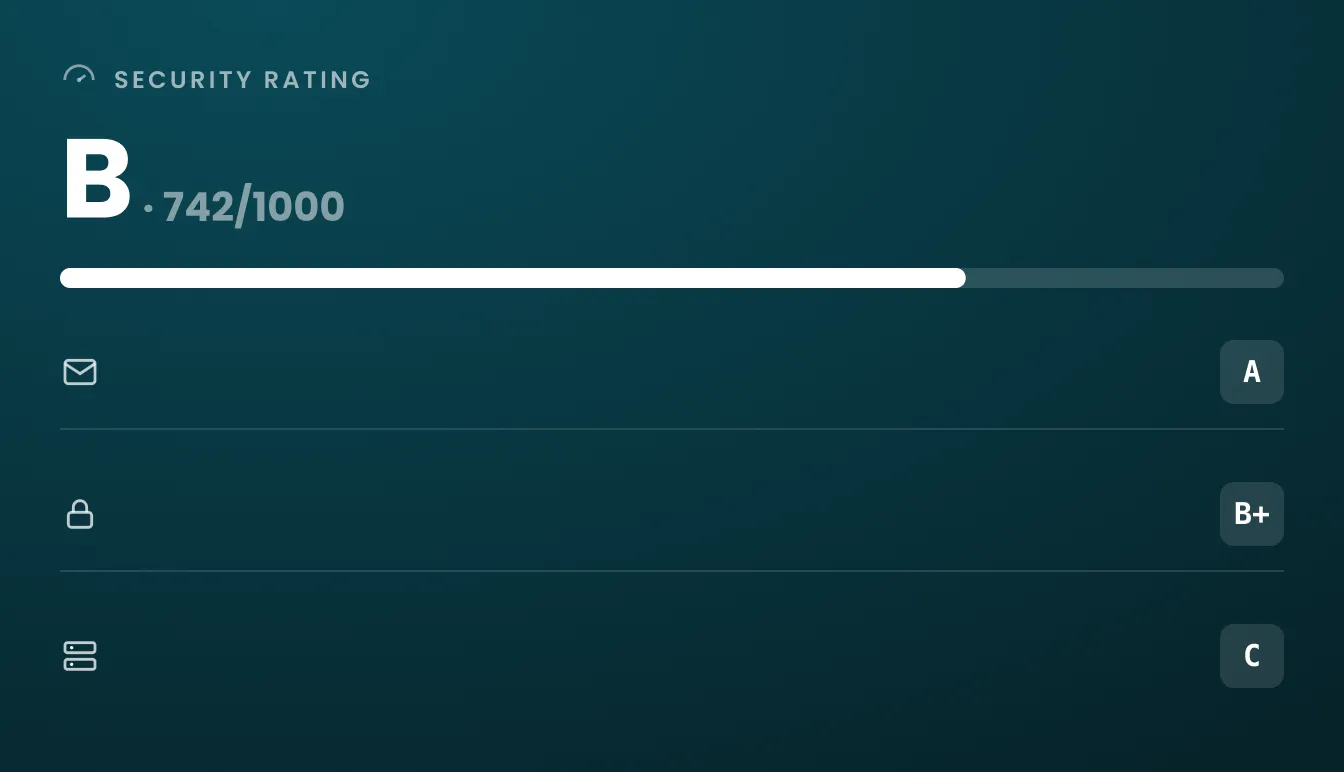
An automated, non-intrusive assessment of the posture visible from the outside, summarised into a score across domains (email, TLS, exposed services, reputation…). Regularly updated, with sector benchmarking.
It creates a common language with non-experts — executives, the board, insurers, large accounts — and makes a trend objective. An excellent thermometer… that shows the fever but doesn't make the diagnosis.
- Governance and executive reporting
- Third-party assessment at scale (TPRM)
- Surface signals: rarely which app, which version, which flaw
- The score plateaus once the easy wins are fixed
The Web Scanner (DAST)
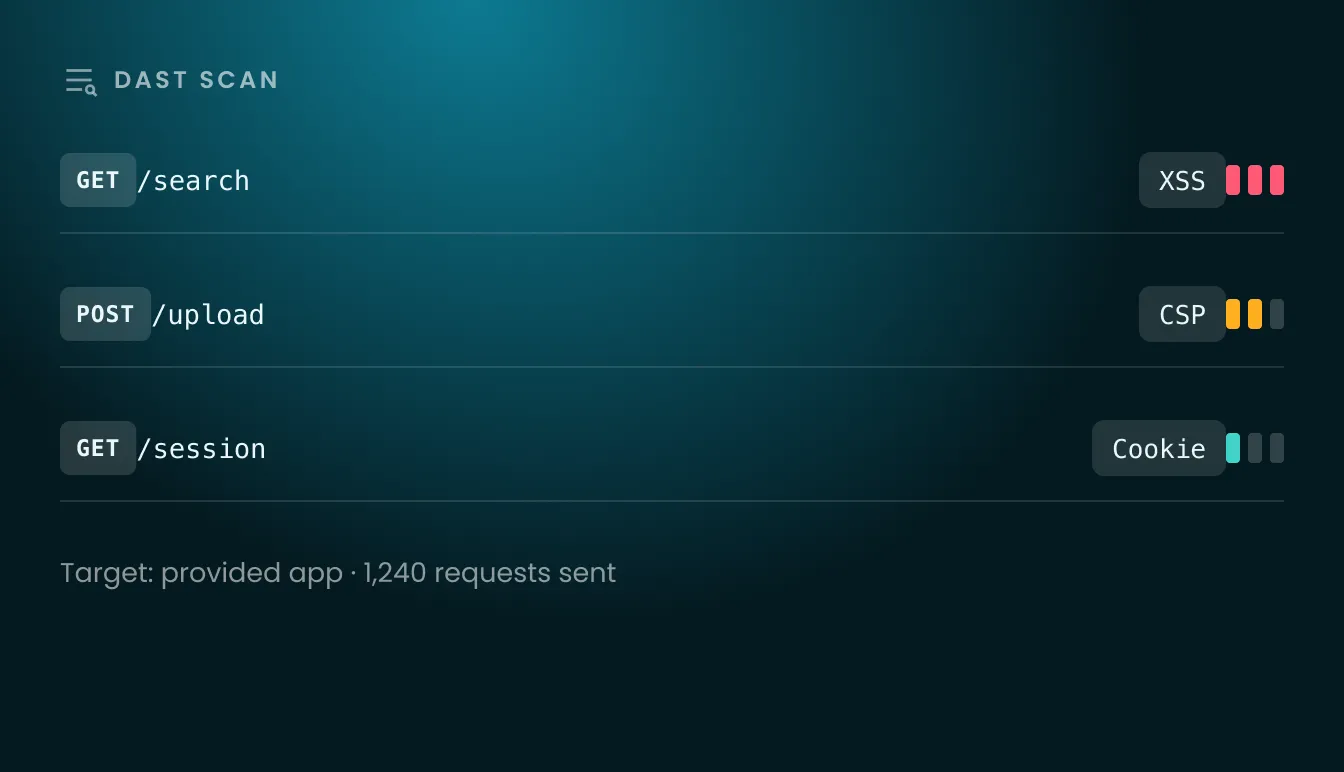
DAST actively tests a running application by sending it requests designed to reveal vulnerabilities. Depending on its configuration, it can generate significant traffic or change the application's state.
It can be run on demand, scheduled or integrated into a CI/CD pipeline. Repeatable at will, it covers a broad range of common technical flaws on the applications you point it at, without engaging an expert every time.
- Automated detection of common technical flaws
- Repeatable, integrable into the development cycle (CI/CD)
- Active: depending on configuration, it can generate traffic or change the application's state
- Doesn't discover the perimeter (targets must be supplied) and produces false positives to triage
- Misses the business logic and complex attack paths a human pentest finds
In the development cycle and on critical applications, alongside a periodic human review.
Penetration Testing
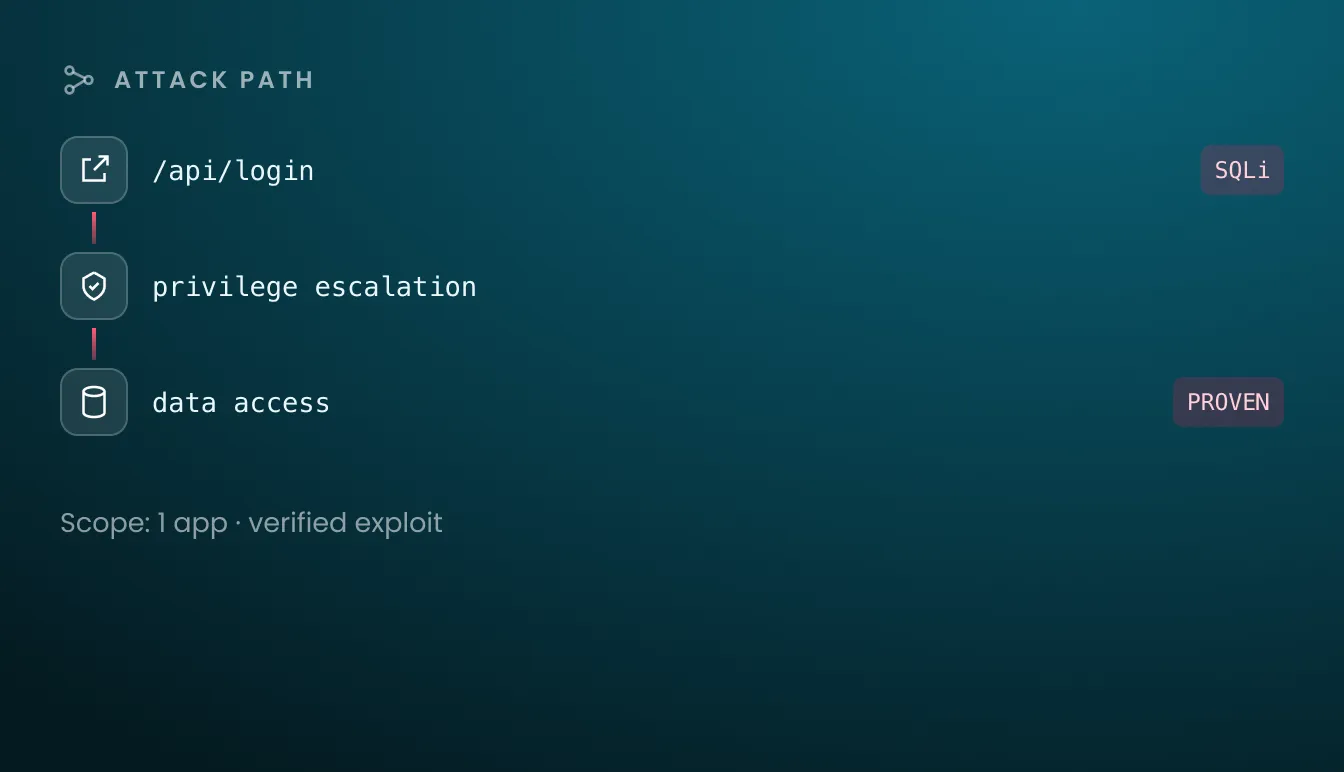
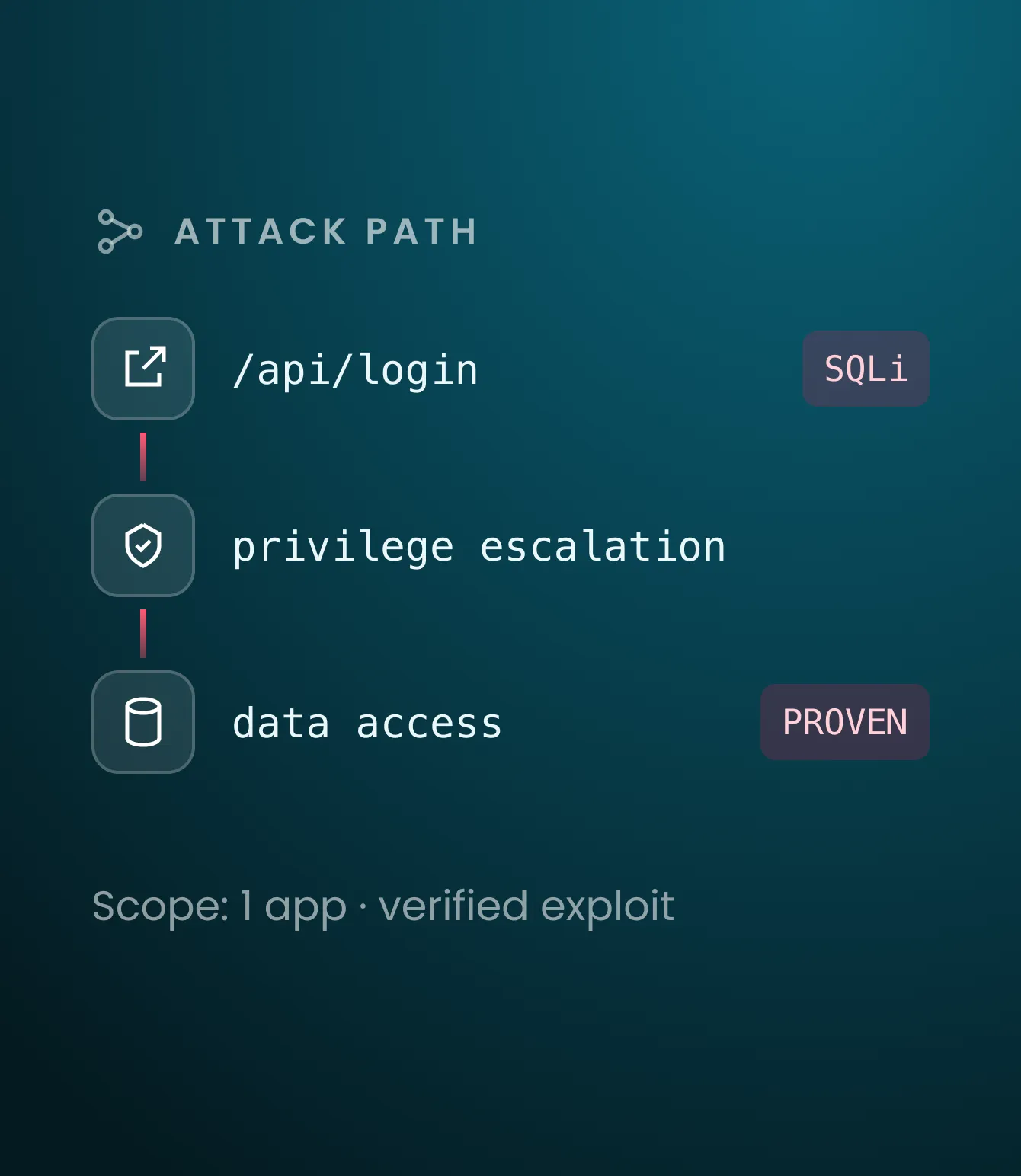
A simulated attack run by offensive experts on a defined scope, to demonstrate what a real attacker would obtain. Penetration testing provides the deepest human validation of exploitability.
It also uncovers chained flaws, business-logic errors and attack scenarios that automated tools struggle to detect. In many regulatory and contractual frameworks, it is also a de facto requirement.
- Concrete proof of exploitability
- Business logic and complex attack paths
- Often a dated snapshot — except with PTaaS or bug bounty, delivered continuously
- Limited to the declared scope; human expertise is scarce and costly
Classic pentest — one-off, defined scope, dated report.
PTaaS (pentest as a service) — same logic, delivered continuously via a platform, on subscription.
Bug bounty — continuous, crowd-sourced, paid on results, broad coverage.
Web ASM
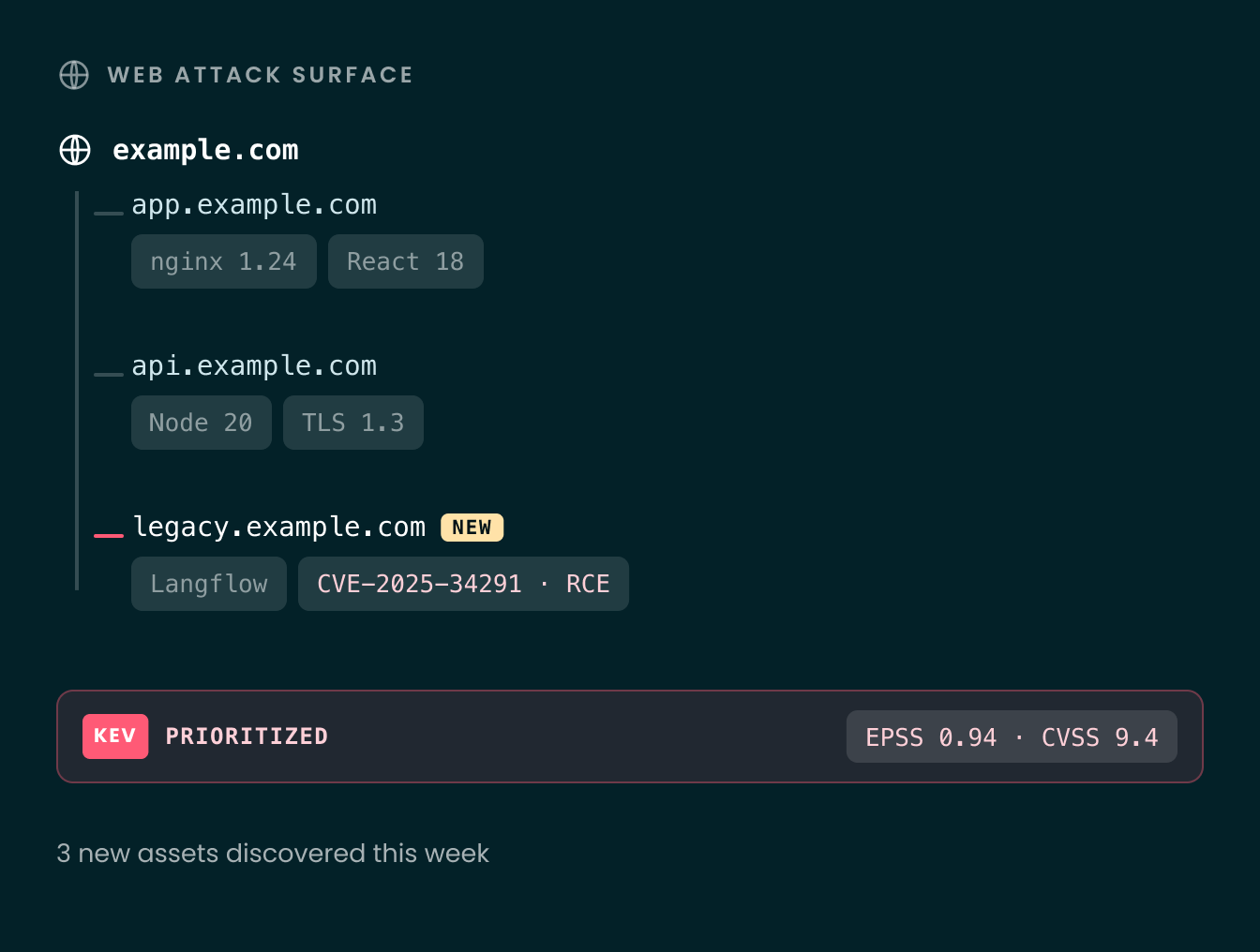
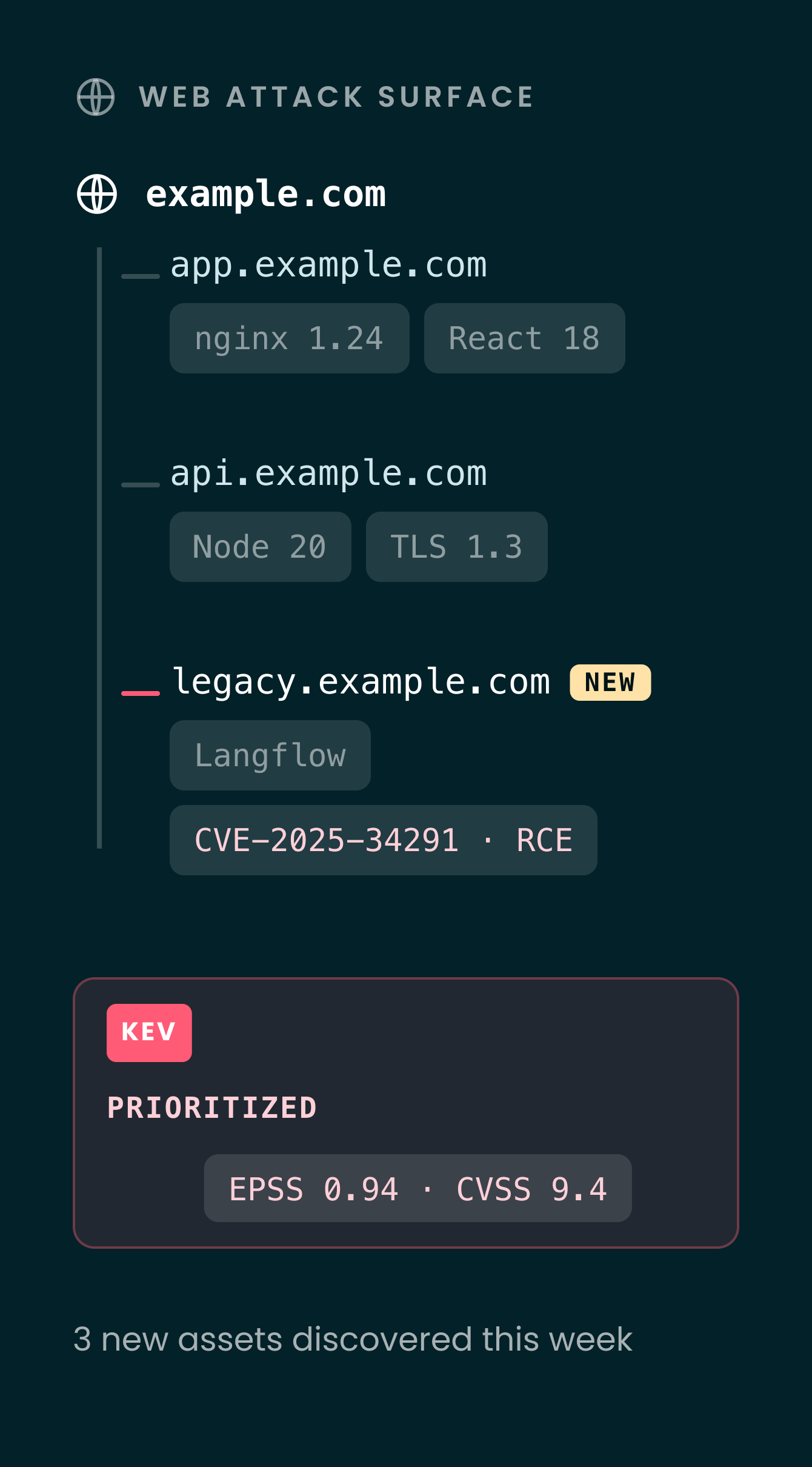
At Purplemet, Web ASM refers to an External Attack Surface Management approach enriched with an in-depth analysis of the web application layer: discovery of externally identifiable assets, identification of technologies, detection or estimation of their versions, mapping against known vulnerabilities, and analysis of external configurations.
In practice, it continuously monitors externally identifiable assets — web applications, subdomains, APIs and forgotten interfaces (shadow IT included) — as well as the exposed configuration: certificates, domain and email security (SPF, DKIM, DMARC, DNSSEC, CAA, BIMI, MTA-STS, TLS-RPT, DANE, SMTP TLS), zone-transfer exposure (AXFR), sensitive ports and services.
Its distinctive strength: deep web expertise. For each application, the technologies and versions detected or estimated are continuously matched against potentially applicable vulnerabilities (CVE), then prioritised using CVSS, EPSS and the CISA KEV catalog — to help fix what matters most first. All without intrusion or installation, continuously answering three questions: what am I really exposing? what has changed? what should I fix first?
- Certificates, DNS and email security (SPF, DKIM, DMARC, DNSSEC, CAA, BIMI, MTA-STS, TLS-RPT, DANE, SMTP TLS)
- Exposed ports, sensitive services and zone transfers (AXFR)
- Technologies and versions detected or estimated, potentially applicable CVEs
- Prioritisation by EPSS, CVSS and actively exploited vulnerabilities (KEV)
- Continuous change detection and security-rating tracking (A–F)
- Doesn't prove exploitability or test business logic — that's the pentest's role
As soon as your web perimeter exceeds what one person can track from memory: multiple applications, subsidiaries, vendors who deploy, a backlog of past projects.
The Comparison Table
The main families of solutions, compared line by line.
Security Rating
Web Scanner (DAST)
Penetration Testing

Question answered
Frequency
Where do we stand overall?
Score updated regularly
On demand, scheduled or in CI/CD
One-off
Continuous
Does this app have detectable flaws?
Is this target exploitable?
What are we exposing, and what to fix?
Intrusiveness
Non-intrusive
Active — impact varies by test
Intrusive (simulated attacks)
Non-intrusive
Depth
Surface signals, standardised
Active testing, declared scope
Very deep, narrow scope
Web expertise + exposed config, across the whole perimeter
Unknown assets (shadow IT)
Partially visible
Outside the declared scope
Generally out of scope unless discovered or included in the engagement
Discovered continuously
Proof of exploitability
Fix prioritisation
Natural audience
No
Global score, hardly actionable
Executives, insurers, procurement
Depends on the vulnerability and tool
From the scan
Dev / AppSec team
Yes
From the report, one-off
Security team, auditors
No
EPSS, CVSS & KEV, continuous
CISO & security team, day to day
Cost model
Subscription
Subscription / license
Human engagement
Usage-based subscription
Question answered

Where do we stand overall?
Does this app have detectable flaws?
Is this target exploitable?
What are we exposing, and what to fix?
Frequency
Score updated regularly
On demand, scheduled or in CI/CD
One-off
Continuous
Intrusiveness
Non-intrusive
Active — impact varies by test
Intrusive (simulated attacks)
Non-intrusive
Depth
Surface signals, standardised
Active testing, declared scope
Very deep, narrow scope
Web expertise + exposed config, across the whole perimeter
Unknown assets
(shadow IT)
Partially visible
Outside the declared scope
Generally out of scope unless discovered or included in the engagement
Discovered continuously
Proof of exploitability
No
Depends on the vulnerability and tool
Yes
No
Fix prioritisation
Global score, hardly actionable
From the scan
From the report, one-off
EPSS, CVSS & KEV, continuous
Natural audience
Executives, insurers, procurement
Dev / AppSec team
Security team, auditors
CISO & security team, day to day
Cost model
Subscription
Subscription / license
Human engagement
Usage-based subscription
Web ASM doesn't replace the others:
it makes them more effective — it raises the score and points active tests (DAST scanner, pentest) where the risk is real.
As with any external analysis, detection depends on publicly observable signals. A match with a CVE indicates potential exposure and does not, on its own, constitute proof of exploitability.
They Combine And Reinforce Each Other
The takeaway isn't “pick the right column.” Mature organisations orchestrate them, each reinforcing the others.
Ratings
They create the language for the boardroom and unlock budget.
Web ASM
It keeps the inventory, detects changes and prioritises. It raises the score and tells active tests where to strike.
Scanner (DAST) & Pentest
On the perimeter monitoring has targeted — automated (DAST) then human (pentest), at whatever frequency the budget allows.
Answers
Does Web ASM replace penetration testing, PTaaS or bug bounty?
No. Web ASM identifies and prioritises continuously; penetration testing — in all its forms — proves exploitability in depth. PTaaS (pentesting delivered continuously via a platform) and bug bounty (crowd-sourced research, paid on results) are variants of that same offensive family: more frequent, but sharing the limit of the declared scope. That's where Web ASM stays complementary: its continuous mapping reveals what you truly expose (shadow IT included) and lets you focus the offensive effort on the highest-risk applications, making every day of expertise pay off.
Beyond web applications, what does Web ASM cover?
Beyond application analysis (technologies, versions and CVEs of each application), Web ASM monitors the exposed configuration: TLS certificates, domain and email security (SPF, DKIM, DMARC, DNSSEC, CAA, SMTP TLS, DANE), ports, sensitive services and zone transfers (AXFR). The difference with a rating: these signals are tied here to the asset concerned and actionable, continuously — not merely aggregated into a score.
ASM, EASM, Web ASM: what are the differences?
ASM (Attack Surface Management) is the general discipline: continuously discovering and monitoring everything an organisation exposes. EASM (External ASM) is its outward-facing part — domains, subdomains, IP addresses, services, certificates. Purplemet's Web ASM covers that external perimeter (EASM) and goes further on the web application layer: for each application, an inventory of technologies and their versions, and their continuous mapping to CVEs.
What's the difference between a web scanner (DAST) and Web ASM?
A dynamic web scanner (DAST) actively tests an application you point it at, sending it requests — intrusively and as a one-off. Web ASM starts from the outside, with no intrusion or installation: it first discovers what you expose (shadow IT included), builds a continuous technology inventory and prioritises (EPSS, CVSS, actively exploited vulnerabilities). The two complement each other: ASM shows what to look at and reveals out-of-scope targets, DAST or the pentest goes deeper.
Can you combine ratings, web scanner, penetration testing and Web ASM?
Yes, and it's the practice of mature organisations: ratings for governance and third parties, Web ASM for daily operations, the scanner (DAST) and penetration testing for in-depth validation of critical assets. Each reinforces the others.
Start by Knowing What You Expose
This first step costs nothing: from a single domain name, discover what you really expose — technologies, versions and first risk signals included.
